

Guide
Insulated or non-insulated building?
Whether a building needs insulation depends on what you keep in it and what you do there. Between an open canopy and a fully insulated building there are several steps.
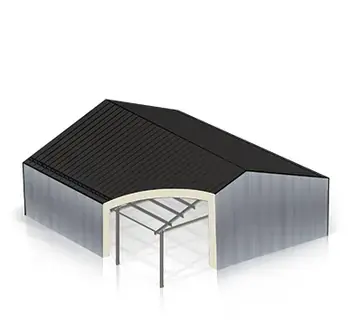
Protection levels
From an open canopy to a fully insulated building
Five levels of protection for your goods: choose roof, walls, felt and insulation to suit the use.
- 1
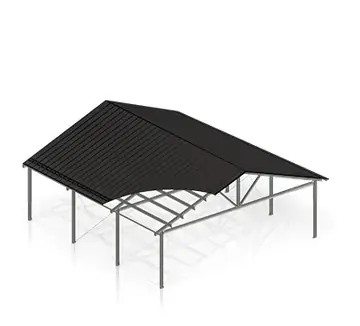
Canopy
Especially popular in farming for protecting hay and in motoring for protecting vehicles.
- Roof
- Walls
- Felt against condensation
- Insulation
- 2
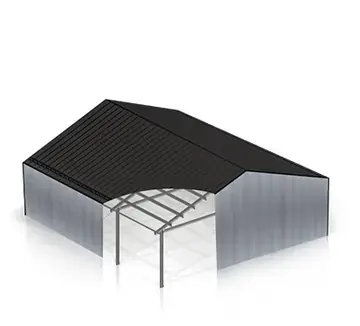
Non-insulated building
For storing farm and other products, machinery or goods out of the weather.
- Roof
- Walls
- Felt against condensation
- Insulation
- 3
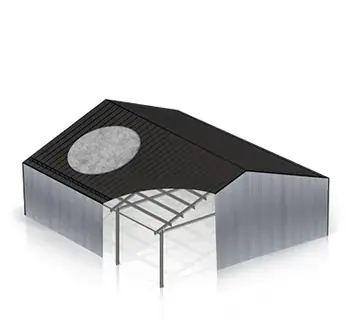
Felt-protected building
For storing all kinds of goods, with extra felt protection of the roofing.
- Roof
- Walls
- Felt against condensation
- Insulation · basic
- 4
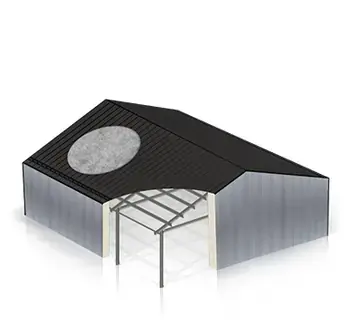
Partly insulated building
Partial protection of products and goods from temperature effects; also suits services.
- Roof
- Walls
- Felt against condensation
- Insulation · partial
- 5
Fully insulated building
High protection of goods from the environment; ideal for business premises and work.
- Roof
- Walls
- Felt against condensation · lv_pur
- Insulation · complete, polyurethane core
Condensation
When felt or DRIPSTOP® is enough
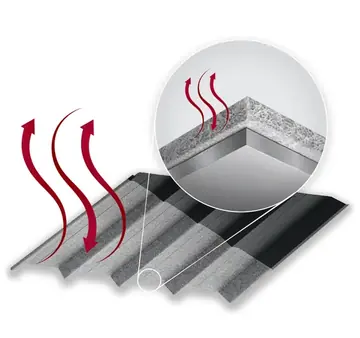
In non-insulated or partly insulated buildings, condensation can form under the sheet when warm, humid air meets cold metal, and it then drips into the building.
Felt or the DRIPSTOP® layer bonded to the underside of the sheet holds this moisture and releases it again when the conditions change. It is recommended for halls, warehouses, canopies and farm buildings without classic insulation; properly insulated buildings do not need it.
Insulated panels
Three cores for warm buildings
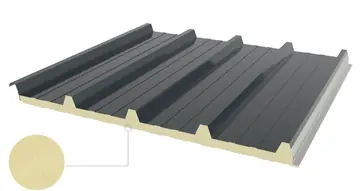
PUR (polyurethane foam)
The most widely used core: excellent thermal insulation at low weight. A rigid foam injected between the two facings. Ideal where energy efficiency matters and there are no special fire requirements. Thicknesses: 15, 30, 40, 50, 60, 80, 100, 120 and 150 mm.
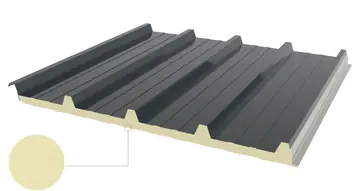
PIR (polyisocyanurate)
An upgrade of PUR with better fire resistance, even better insulation and higher temperature resistance, for industrial and business buildings where fire safety matters. Thicknesses: 30, 40, 50, 60, 80, 100, 120 and 150 mm.
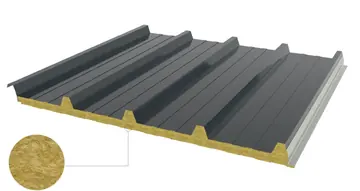
Rock wool
A natural material made from volcanic rock: very good thermal and sound insulation and the highest fire resistance. Non-combustible, for buildings with the strictest fire rules. Thicknesses: 60, 80, 100, 120, 150 and 200 mm.
Terraces
Insulated canopies, too
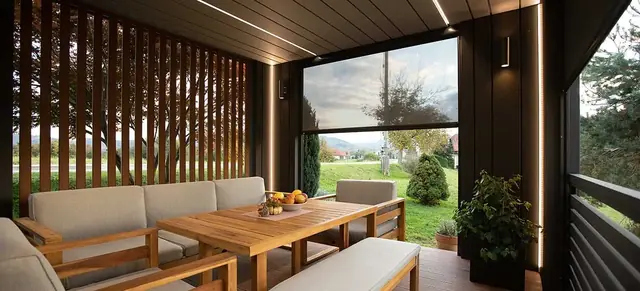
With insulated wall panels, a covered terrace stays in use beyond the warmest months, into autumn and winter.
Guides
More guides
 Permits
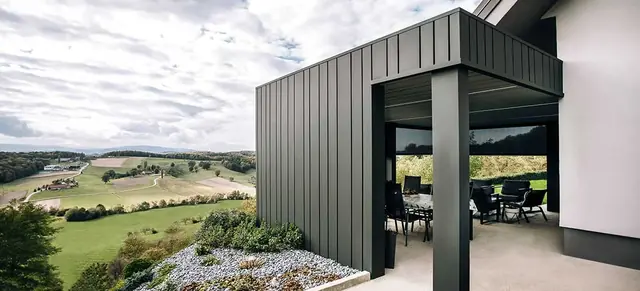
How to get a building permit for a canopy
Why the size of the building matters, who prepares the documents and where to apply.
Read the guide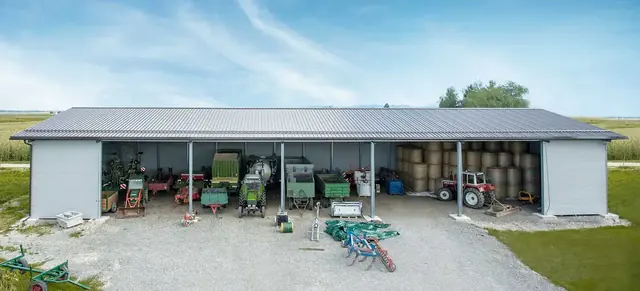 Planning
Canopy or closed building?
What an open canopy and a closed building are each best for, and the five levels of protection in between.
Read the guide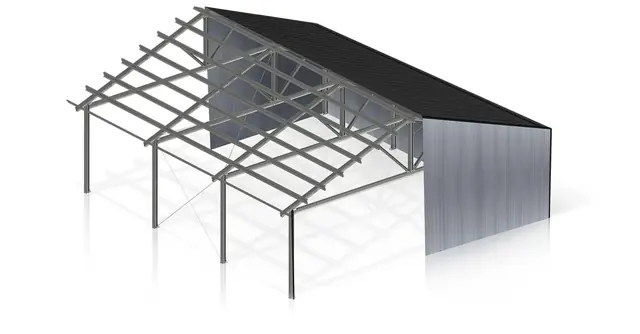 Planning · Construction
From idea to finished building
Advice, design, production and erection: how a Petrovič building comes about.
Read the guide
Questions about your building?
Our sales advisers will gladly help you before you start.